Jharokha Wall Decor: Bring Indian Craft Into Your Home
Jharokha wall decor brings the look of traditional Indian architecture into modern homes. A jharokha takes inspiration from the carved windows found in old palaces, havelis, and heritage homes. These windows often had detailed woodwork, arches, small openings, and beautiful patterns. Today, you can use a jharokha as a wall decoration without changing the structure of your home. It can add character to an empty wall and give your room a clear connection to Indian art and craft.
What Is a Jharokha?
A jharokha is a traditional window design that became popular in Indian architecture. People used these windows in homes and royal buildings for different purposes. They allowed people to look outside while also providing shade and privacy. Many jharokhas feature carved frames, arches, lattice patterns, and small decorative details.
Today, craftsmen and furniture makers use the same design ideas to create wall decor. You can find jharokhas made from wood, metal, MDF, and other materials. Wooden jharokhas remain a popular choice because the natural grain and carved details give them a warm appearance.
Why Choose Jharokha Wall Decor?
A plain wall can sometimes feel empty, especially when you do not want to cover it with paintings or photographs. A jharokha gives you another option. Its shape and carved details create a clear focal point without requiring many other decorations.
Jharokha wall decor also works well for people who enjoy Indian-inspired interiors. It connects your home with traditional design while still fitting into many modern spaces. You can place one in a contemporary room and use simple furniture around it. You can also pair it with other traditional pieces if you want a stronger Indian theme.
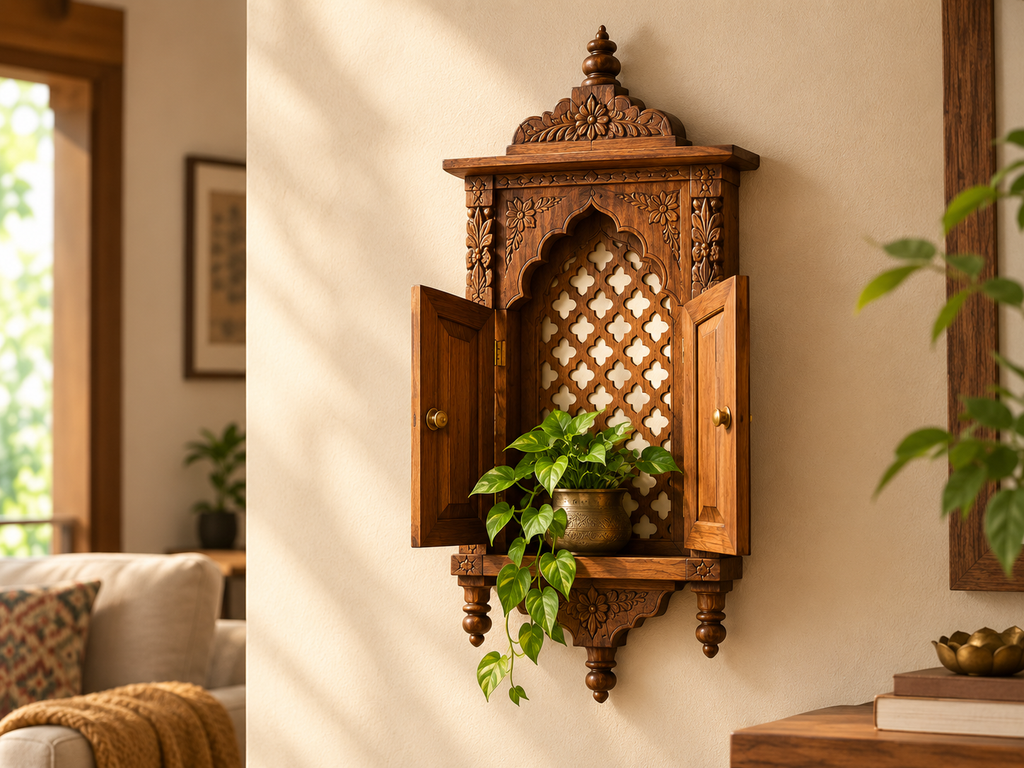
The design also adds depth to a wall. A three-dimensional wooden jharokha can create shadows when sunlight or warm indoor lights fall across its carvings. This small detail can make the wall feel more interesting throughout the day.
Where Can You Place a Jharokha?
The living room is one of the easiest places to use jharokha wall decor. You can hang it above a console table, behind a sofa, or on a large empty wall. Keep the area around it simple so the carved design remains easy to notice.
A bedroom can also work well. Place a jharokha above a side table or on a wall opposite the bed. Add a small plant or a simple decorative object if the design includes a shelf. Avoid adding too many items because the jharokha already provides plenty of detail.
You can also use a jharokha in an entrance area or hallway. These spaces often have limited room for furniture, so a wall-mounted piece can add interest without taking up floor space. Near an entrance, it can also create a clear first impression of your home’s style.
How to Style Jharokha Wall Decor
You do not need many accessories to style a jharokha. Start by choosing a wall with enough empty space around the piece. A neutral wall can help the woodwork stand out without making the room feel busy.
Plants work especially well with wooden jharokhas. You can place a small leafy plant inside a jharokha shelf or hang a trailing plant nearby. Green leaves add a natural touch and work well with warm wood tones.
You can also use a small brass diya, bowl, vase, or decorative object. These pieces can support the Indian theme without taking attention away from the main wall decor. If your jharokha has strong carvings, keep the accessories simple.
Lighting can also change the way the piece looks. A warm wall light placed above or beside the jharokha can highlight the carved patterns and create soft shadows. Make sure the light does not create too much glare on the surface.
Choose the Right Material and Finish
Wooden jharokhas suit homes that use natural materials and warm colours. Look for a finish that works with your existing furniture. Dark wood can create a strong contrast against a light wall, while medium or lighter wood can create a softer look.
Before buying one, check the size of your wall. A very small jharokha may disappear on a large wall, while a very large piece can make a small room feel crowded. Measure the available space and leave enough room around the decoration.
Also check how the piece attaches to the wall. A carved wooden jharokha can have considerable weight, so use suitable wall fittings and follow the manufacturer’s installation instructions.
Mix Traditional and Modern Styles
You do not need a fully traditional home to use jharokha decor. In fact, mixing traditional and modern pieces can create a balanced room. Pair a carved jharokha with a simple sofa, clean-lined console, neutral curtains, or modern lighting.
The key is to repeat a few related elements. For example, you can use wooden furniture, brass accents, and natural fabrics around the jharokha. This creates a connection between the wall decor and the rest of the room without making every item look traditional.
Final Thoughts
Jharokha wall decor offers a simple way to bring Indian design into your home. Its carved patterns, wooden texture, and traditional shape can give an empty wall more character while keeping the room comfortable and practical. You can use it in the living room, bedroom, hallway, or entrance and style it with plants, brass pieces, soft lighting, or simple accessories.
Choose a size that suits your wall, select a finish that works with your furniture, and keep the surrounding decor simple. With the right placement, a jharokha can become a meaningful part of your home and give your space a connection to India’s rich tradition of craftsmanship.